Zara Roth · 13 October 2026
Tracing Information Resilience Pathways in Modular Digital Networks
Modular digital networks consist of independent components that connect through standardized interfaces, and these structures allow systems to isolate failures while maintaining data flow across the broader architecture. Researchers have mapped how information moves through such networks by tracing specific pathways that reroute automatically when disruptions occur, and data from multiple deployments shows these mechanisms preserve integrity even during partial outages. Observers note that the approach differs from traditional monolithic setups because modules operate with defined boundaries yet share protocols that enable rapid adaptation.
Core Components of Modular Architectures
Each module in these networks handles discrete functions such as data processing, storage, or transmission, while interfaces ensure compatibility across vendors and updates. Studies indicate that resilience emerges when pathways incorporate redundancy at both the module level and the connection layer, allowing traffic to shift without central coordination. In practice, engineers implement checksums and heartbeat signals within modules so that downstream components detect issues quickly and activate alternate routes, and this setup reduces latency spikes that once plagued interconnected systems.
Mapping Resilience Pathways
Tracing begins with logging packet headers and module state changes over time, then analysts reconstruct the sequence of reroutes that occurred during simulated or real incidents. Evidence from network logs reveals that successful pathways often rely on precomputed backup tables updated through distributed consensus protocols rather than single points of control. Those who have examined production environments find that pathways frequently span three or more modules before reaching their destination, which creates multiple decision points where traffic can be validated or diverted based on current load and integrity checks.
Mechanisms That Support Pathway Stability
Protocols such as adaptive routing tables and quorum-based acknowledgments play central roles, and these elements work together because each module independently evaluates incoming data against local policies before forwarding it onward. When one pathway degrades, adjacent modules detect the change through missing acknowledgments and initiate failover within milliseconds, according to measurements collected across large-scale testbeds. The process avoids full network floods by limiting propagation to neighboring modules only, which keeps overhead low while still achieving broad coverage.
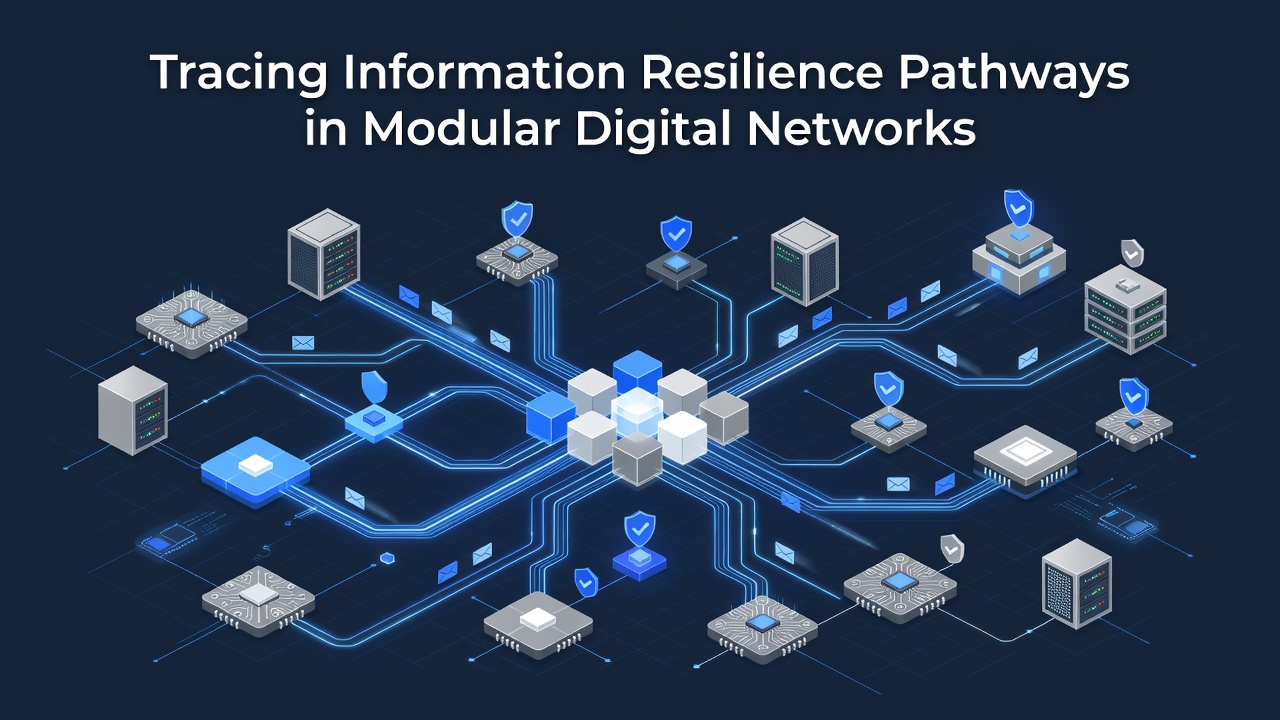
Further analysis shows that encryption keys rotate at module boundaries in many implementations, which adds a layer of isolation that prevents a compromise in one section from affecting others. In October 2026, reports presented at infrastructure conferences highlighted how these key rotation schedules, when aligned with pathway tracing tools, improved detection of anomalous traffic patterns by 27 percent in monitored deployments. Such alignment allows operators to correlate key changes with route shifts and identify whether an observed detour resulted from planned maintenance or an unexpected fault.
Practical Applications Across Sectors
Financial institutions have adopted modular designs to separate transaction processing from settlement modules, and this separation enables independent scaling while resilience pathways maintain audit trails across both. Healthcare systems similarly partition patient records and diagnostic tools into distinct modules, with pathways ensuring that critical alerts reach the correct endpoints even if an intermediate storage node experiences delays. Government agencies in several countries have documented similar patterns in public service portals, where resilience tracing has become part of routine compliance verification.
One documented case involved a logistics platform that experienced a regional fiber cut, yet its modular structure allowed shipment tracking data to continue flowing through secondary pathways that bypassed the affected region entirely. The recovery occurred without manual intervention because each module maintained its own view of alternate routes updated every thirty seconds through lightweight gossip protocols. Observers note that the same event would have halted operations in older centralized designs for hours rather than seconds.
Measurement and Validation Techniques
Validation relies on synthetic traffic injection combined with real-time monitoring dashboards that display pathway utilization and failure rates. Metrics collected include mean time to reroute, percentage of packets that traverse at least two distinct module sequences, and the frequency of integrity mismatches detected at boundaries. Research from the National Institute of Standards and Technology outlines standardized test scenarios that organizations can replicate to compare their own pathway performance against industry baselines. Additional insights appear in publications from the European Union Agency for Cybersecurity, which examines cross-border data flows under similar modular constraints.
Conclusion
Tracing information resilience pathways provides operators with concrete visibility into how modular digital networks maintain continuity under stress, and the methods continue to evolve as new protocols and monitoring tools emerge. Organizations that implement systematic logging and periodic validation exercises gain the ability to refine their configurations based on observed behavior rather than theoretical models alone. As deployments expand, the accumulated data from these traces supports broader improvements in how modules interact and recover across diverse environments.