Jonas Braun · 27 October 2026
Decoding Interplay Between Platform Architecture and Knowledge Circulation in Decentralized Urban Systems
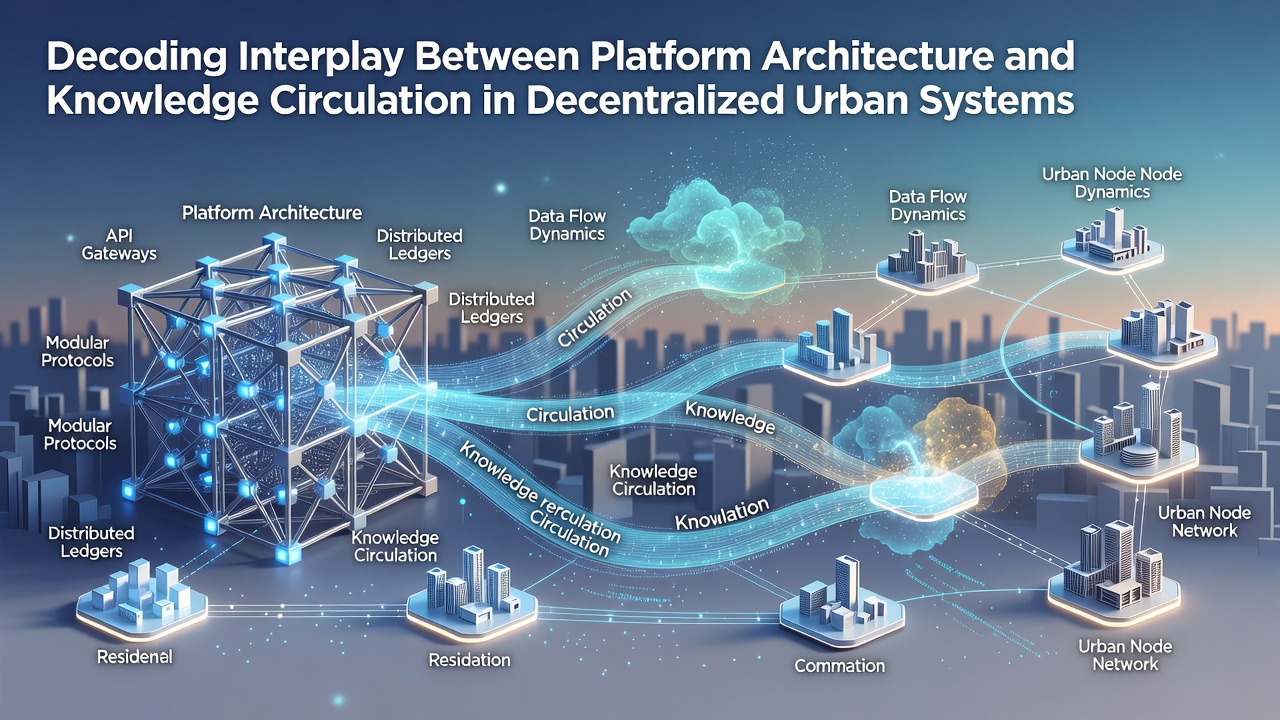
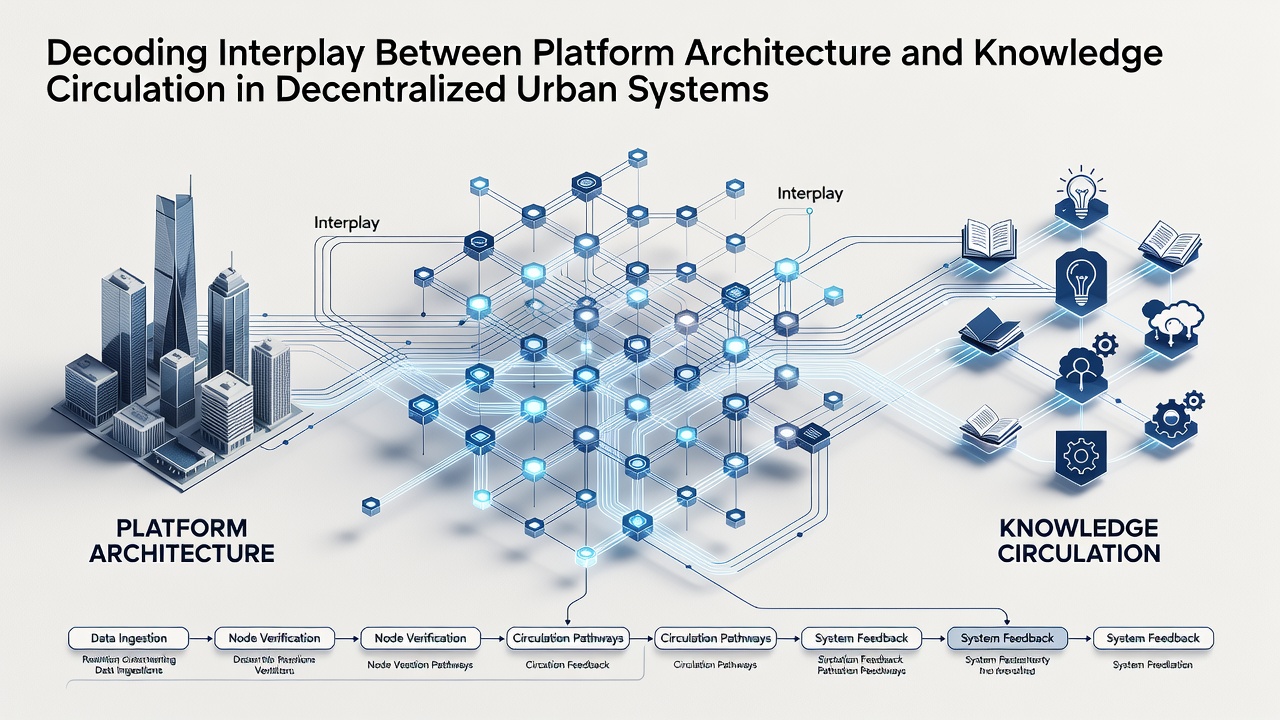
Platform architecture in decentralized urban systems shapes how data moves between nodes, and knowledge circulation depends on modular designs that allow local inputs to reach broader networks without central bottlenecks, according to studies from the European Commission's Joint Research Centre on smart city frameworks. Researchers have mapped these structures across multiple cities where distributed ledgers and open protocols replace single-point servers, which creates pathways for real-time updates from sensors, community reports, and institutional databases to flow simultaneously.
Core Components of Platform Architecture
Decentralized urban platforms rely on layered stacks that separate data storage from application logic, and this separation enables independent scaling of each layer while maintaining interoperability through standardized APIs. Data indicates that cities adopting such models see faster integration of new sources because developers can plug additional modules into existing frameworks without rebuilding core infrastructure, as shown in case analyses from the OECD's urban innovation reports. Observers note that consensus mechanisms, often based on proof-of-stake variants tailored for municipal use, validate contributions from residents and agencies alike, which reduces latency in knowledge updates during peak activity periods.
Security protocols embedded at the architecture level further support circulation by encrypting exchanges at the node level, yet they still permit selective sharing through permissioned channels that city planners designate for public access. In October 2026, several pilot programs in European and North American municipalities will release performance metrics on these protocols, and initial figures reveal reduced downtime compared with legacy centralized systems.
Mechanisms of Knowledge Circulation
Knowledge circulation occurs through bidirectional channels where raw sensor data enters the system and processed insights return to local users in actionable formats, and this loop strengthens when architecture supports semantic tagging that links related datasets across domains. Research from the Australian Urban Research Infrastructure Network highlights how tagging systems allow planners in one district to access verified models from another without manual reformatting, which accelerates decision cycles on infrastructure projects. Those who've examined network logs find that circulation rates increase when platforms incorporate reputation scoring for contributors, because verified sources gain priority routing within the mesh.
Edge computing nodes positioned throughout urban grids process information closer to its origin, which cuts transmission delays and allows immediate feedback loops for applications like traffic management or resource allocation. Evidence from Canadian municipal trials shows these nodes handle up to 70 percent of routine queries locally before any escalation to wider networks, and that containment preserves bandwidth for complex cross-district analyses.
Interplay Dynamics and Observed Patterns
The interplay between architecture and circulation becomes visible when architectural choices directly influence circulation speed and reach, such as when modular node designs permit parallel processing of community-generated content alongside official records. Experts have observed that platforms using graph-based indexing rather than linear databases achieve higher retrieval accuracy for interconnected urban topics, because relationships between housing data, environmental readings, and mobility patterns surface automatically. What's interesting is how governance rules coded into the architecture, including access tiers and update frequencies, determine whether knowledge remains siloed or spreads evenly across stakeholder groups.
Take one analysis of a mid-sized city network where architecture enforced open standards for all new integrations, and circulation metrics rose steadily as more departments contributed datasets without compatibility issues. That outcome aligns with findings from the World Bank’s urban development database, which tracks similar patterns across regions adopting decentralized models. Yet when architecture includes restrictive licensing layers, circulation slows even if the underlying hardware supports high throughput, and planners must adjust protocols to restore balance.
Emerging Trends Through Late 2026
By October 2026, integration of AI-assisted routing within decentralized platforms is expected to refine knowledge circulation further, because algorithms can prioritize urgent local inputs while routing background data to archival layers. Industry reports from the Smart Cities Council document early tests where such routing reduced response times for emergency coordination by measurable margins. Those tracking adoption rates note that cities combining architectural flexibility with clear circulation policies maintain higher participation levels from both public and private contributors over multi-year periods.
Conclusion
Platform architecture and knowledge circulation in decentralized urban systems operate as interdependent elements where design decisions shape data pathways and circulation outcomes feed back into architectural refinements. Data from multiple international sources confirms that modular, standards-based approaches support sustained flows across growing networks, and ongoing pilots scheduled for release in October 2026 will provide additional benchmarks for cities evaluating similar transitions. Continued monitoring of these dynamics offers measurable indicators for future system performance.